
2026-09-15 ·
Mosquito Control Steps for Properties Near the Withlacoochee River
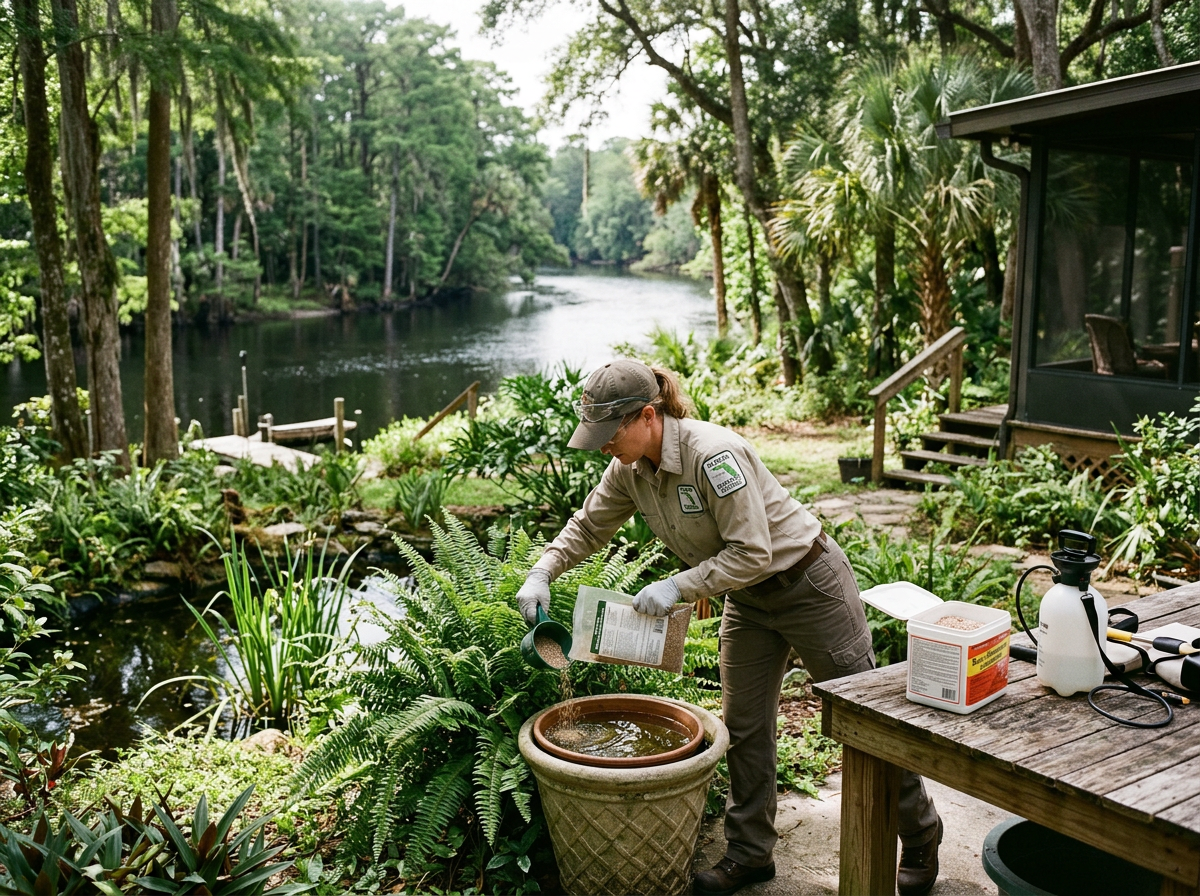
Properties near the Withlacoochee River require consistent attention to standing water and shaded vegetation because Florida mosquitoes breed year-round with no winter die-off. Container species develop from egg to adult in as few as 7 days in as little as a bottle-cap volume of water, while salt-marsh mosquitoes can fly 5 to 20 miles inland from coastal marshes. Afternoon storms refill gutters, tarps, and plant saucers daily, so weekly inspections become the baseline practice for river-adjacent lots.
Identifying River-Specific Breeding Sites
The Withlacoochee creates pockets of slow-moving water and frequent flooding that support both container breeders and species that travel from distant marshes. Bromeliads, bird baths, boat covers, and clogged gutters hold enough water for larvae within hours after rain. Properties within a few hundred feet of the riverbank see higher pressure from these sources because drainage patterns keep soil moist longer than upland lots. Checking these spots every 7 days prevents new adults from emerging before the next storm cycle.
Salt-marsh mosquitoes arrive on wind currents and rest in dense vegetation along the river corridor rather than breeding on site. This means source reduction alone will not eliminate all biting pressure. Homeowners should map shaded areas under oaks, palmettos, and riverbank shrubs where adults rest during daylight hours. Those resting zones become the target for barrier applications that interrupt the cycle without treating open water directly.
Reducing Standing Water Through Targeted Checks
A practical first step is emptying or treating every container that can hold water after each afternoon storm. Saucers under potted plants, tarps on equipment, and boat covers should be tipped or drilled for drainage so water cannot pool. Gutters need cleaning at least monthly during the wet season because even a 2-inch-deep trough breeds mosquitoes in under a week. For larger low spots near the river that cannot be drained, regular monitoring with a dipper reveals larvae before they reach the flying stage.
Bromeliads and other ornamental plants that trap water in leaf axils require special attention on river properties. Flushing these plants weekly with a hose or adding a small amount of approved larvicide keeps them from becoming hidden nurseries. Because the river corridor stays humid, these micro-sites remain productive even between major rains. Consistent removal of these small sources reduces the local population that would otherwise add to the mosquitoes drifting in from marshes.
Applying Barrier Treatments to Resting Vegetation
Barrier treatments focus on the shaded resting sites where adult mosquitoes land after blood-feeding. Products applied to the undersides of leaves and lower branches on shrubs and trees provide several weeks of residual effect. Reapplication intervals of 3 to 4 weeks maintain coverage through the wet season when new vegetation growth and storms wash surfaces. This approach targets the adults already present rather than attempting to treat every possible breeding location along miles of river frontage.
Homeowners can combine barrier work with removal of excess brush and leaf litter that creates additional resting cover. Keeping grass at a moderate height and trimming lower tree limbs improves airflow and reduces humidity in the yard microclimate. These cultural steps make the treated vegetation less attractive over time. Properties directly on the Withlacoochee often need this combination because wind patterns carry mosquitoes from both upstream marshes and downstream tidal areas.
Screening and Perimeter Measures for No-See-Ums
No-see-ums pass through standard window screens because their bodies are smaller than the typical 1/16-inch mesh. Installing 20-mesh or finer screening on porches and windows reduces entry when residents sit outside near the river. Fans that create steady airflow also help because these midges are weak fliers and avoid moving air. These physical barriers complement breeding-site work without relying on chemical coverage alone.