
2026-09-15 ·
How Rainy Season Boosts Mosquito Activity in Brooksville
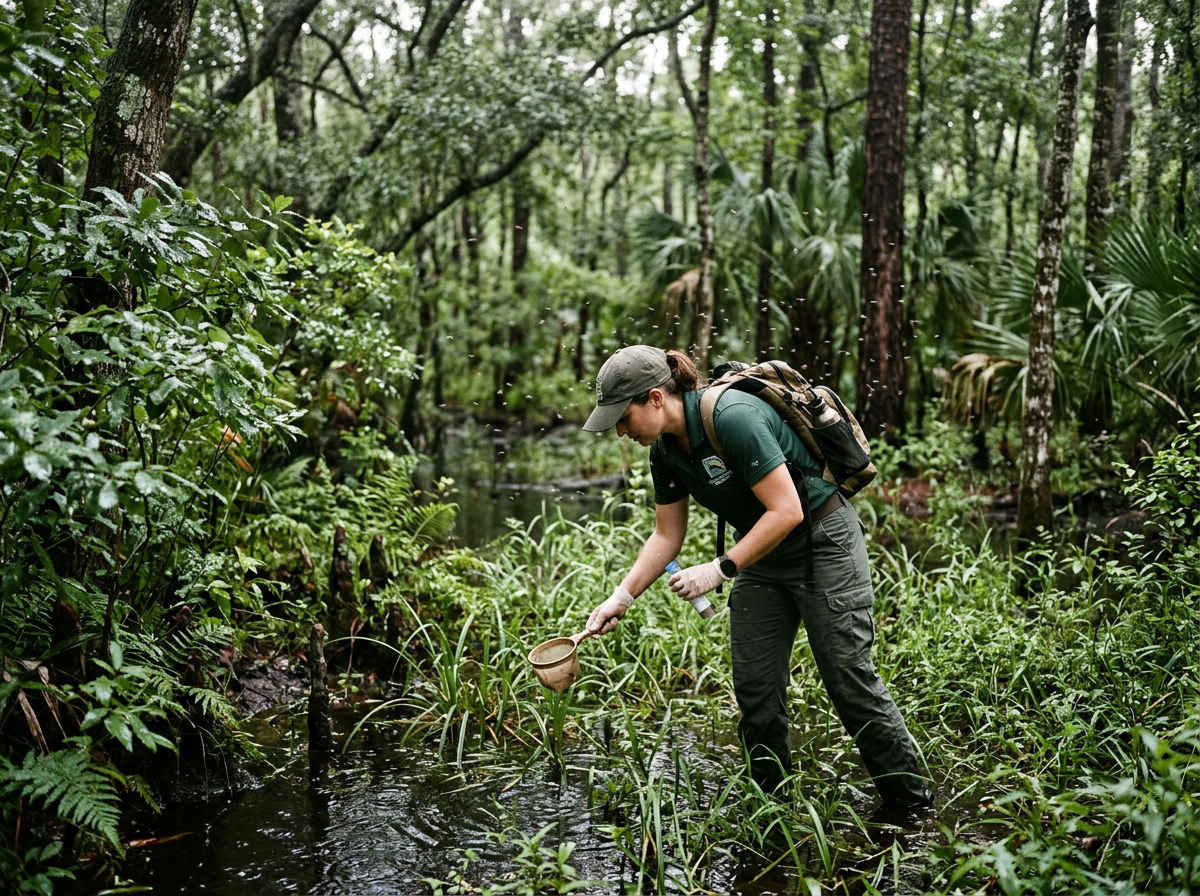
Brooksville rainy season boosts mosquito activity because daily afternoon storms refill containers and vegetation with fresh water while temperatures stay high enough for eggs to hatch and reach adult stage in 7-10 days, with no winter die-off to interrupt the cycle.
How Afternoon Storms Create Breeding Sites
Brooksville receives frequent afternoon thunderstorms from June through September that drop enough rain to fill plant saucers, bird baths, bromeliads, gutters, tarps, and boat covers. Even a small volume of standing water, such as a bottle cap or 1/2 inch in a low spot, supplies enough habitat for container-breeding mosquitoes to deposit eggs. These storms reset the water level almost every day, preventing surfaces from drying out and allowing new batches of eggs to develop without interruption. Property owners who check these spots after each storm reduce the number of new adults emerging locally. Standing Water and Breeding Site Reduction explains practical steps for locating and emptying these sites around homes and yards in Brooksville.
Differences Between Local Mosquito Species
Container-breeding mosquitoes such as those that develop in bromeliads and bird baths remain close to their emergence sites, typically traveling only a few hundred yards. Salt-marsh mosquitoes, by contrast, can fly several miles inland from coastal areas and arrive in Brooksville yards after storms push them farther. Both types remain active year-round because Florida temperatures never drop low enough for a full population crash. The combination means residents face both immediate backyard sources and occasional influxes from distant breeding areas following heavy rain events. Understanding these flight ranges helps explain why activity can spike quickly after a single week of daily storms.
Impact on Resting Areas and Barrier Approaches
Mosquitoes rest in shaded vegetation during daylight hours, and the extra moisture from rainy season keeps those plants lush and attractive. Barrier treatments focus on treating the lower branches and leaf litter where adults rest between blood meals. Because new adults emerge every 7-10 days, many properties schedule follow-up visits on 2-3 week intervals to maintain coverage through the wet months. Mosquito Control outlines how these perimeter applications target resting sites without relying on misting systems. Yards with dense oak cover often need extra attention to the shaded understory where humidity stays highest after storms.
Addressing No-See-Ums During Wet Periods
No-see-ums also increase after heavy rain because they breed in the same moist soil and leaf litter that supports mosquitoes. Standard window screens with 16x16 mesh allow these tiny insects to pass through, so 20x20 or finer mesh is required for effective exclusion. No-See-Um and Biting Midge Control covers additional steps such as treating perimeter vegetation where adults rest. Homeowners in Brooksville who combine source reduction with targeted vegetation treatment see steadier results during the months when storms arrive almost daily.
Checking containers and shaded areas after each storm, combined with timely barrier applications, keeps local populations from building unchecked through Brooksville rainy season. Reducing Mosquitoes Around Oak-Lined Yards in Brooksville provides further detail on managing vegetation in local yards.