
2026-09-15 ·
Spotting Mosquito Breeding Sites After Summer Storms
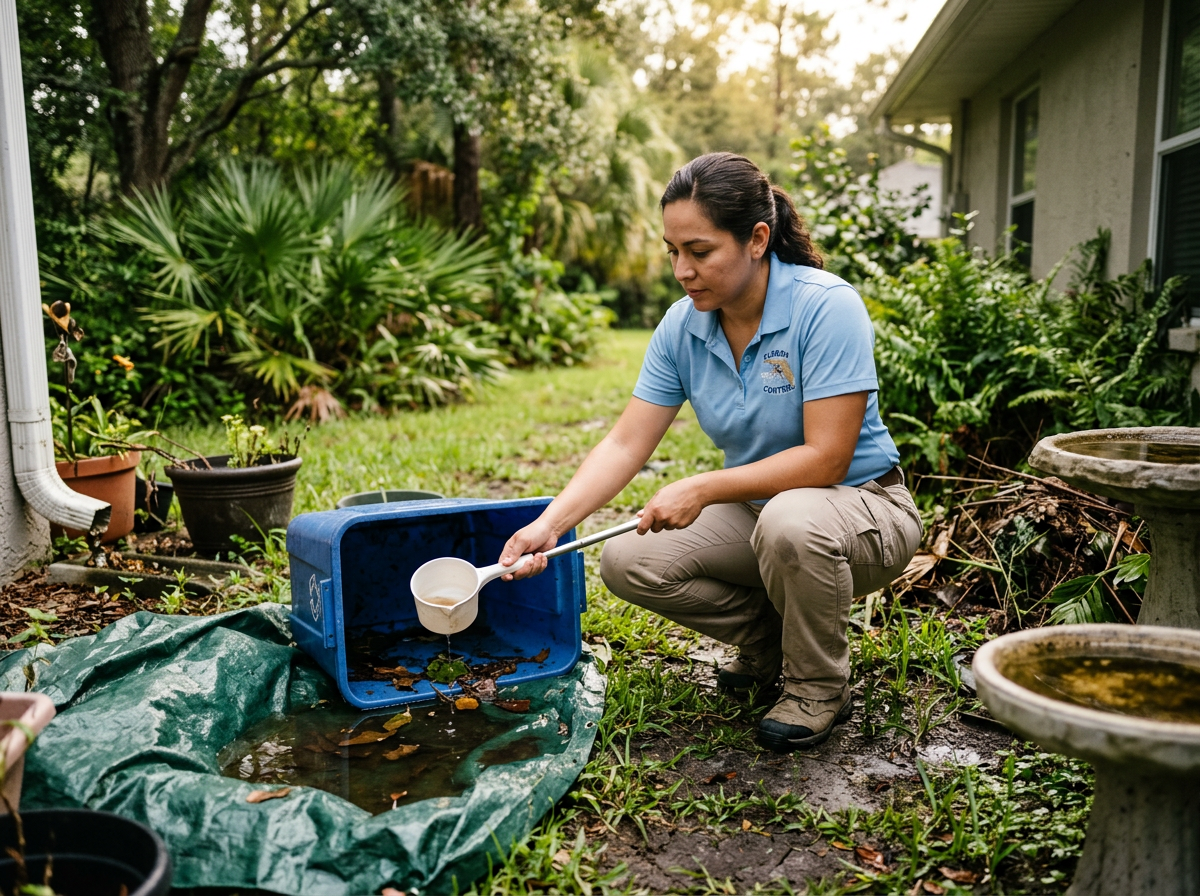
After summer storms in Brooksville, mosquitoes can complete their life cycle from egg to adult in 7-10 days when standing water is present. Container-breeding species need only a few ounces of water, such as what collects in a bottle cap or plant saucer, while salt-marsh mosquitoes may travel several miles inland from coastal marshes. Checking yards within 48 hours after heavy rain helps locate these sites before larvae mature.
Common Breeding Sites Created by Storms
Summer afternoon storms in central Florida dump enough rain to fill every low spot and container on a property. Bromeliads, bird baths, plant saucers, and tarps collect water that remains for days. Gutters clogged with leaves hold several gallons along roof lines, and boat covers or pool toys trap pockets that stay shaded. These small volumes support hundreds of larvae per square foot when temperatures stay above 80 degrees. Salt-marsh species arrive from farther away, but local container breeders multiply right on site once water sits longer than three days.
Checking Containers and Yard Items
Walk the yard the morning after rain and lift or empty every movable item that can hold water. Turn over saucers under potted plants, dump water from wheelbarrows and buckets, and rinse bromeliad cups so they do not refill. Check tarps on equipment and covers on boats for pooled sections that need tightening or draining. Even a 5-gallon bucket with an inch of water left in the bottom can produce adults within a week. Repeat the check after each storm because daily rain resets the cycle.
Gutters and Drainage Issues
Clogged gutters and downspouts become reliable breeding locations when leaves trap water along roof edges. Inspect these areas with a ladder or hire a service that offers inspecting gutters and downspouts for mosquito larvae. Flush the downspouts to confirm water flows freely to the ground instead of backing up. Add gutter guards if debris accumulates faster than monthly cleanings can handle. Properties near the Withlacoochee River often see extra flow from upstream runoff that keeps low spots wet longer than upland yards.
Vegetation and Shaded Resting Areas
Mosquitoes rest in shaded vegetation during the day before becoming active at dusk. Dense shrubs, tall grasses, and tree lines next to standing water give adults cover. After storms, trim lower branches and clear leaf litter so sunlight reaches the ground and speeds evaporation. Barrier treatments applied to these resting spots every 2-3 weeks can reduce adult numbers without needing to treat every puddle. Focus on the shaded side of fences and the north side of structures where moisture lingers longest.
Monitoring and Reduction Steps
Set a weekly schedule to walk the property and note any new water collections, especially after storms. Keep a simple list of problem items such as saucers, toys, and covers so nothing is missed. For ongoing help with larger yards or persistent issues, review options like standing water and breeding site reduction or safe mosquito prevention around pools and spas in Brooksville. No-see-ums that pass through standard window screens require even finer mesh of 20 by 20 or smaller to block entry when they breed in nearby damp soil. Consistent checks after each rain remain the most direct way to limit new adults.