
2026-09-15 ·
Mosquito Risks During Hurricane Recovery in Hernando County
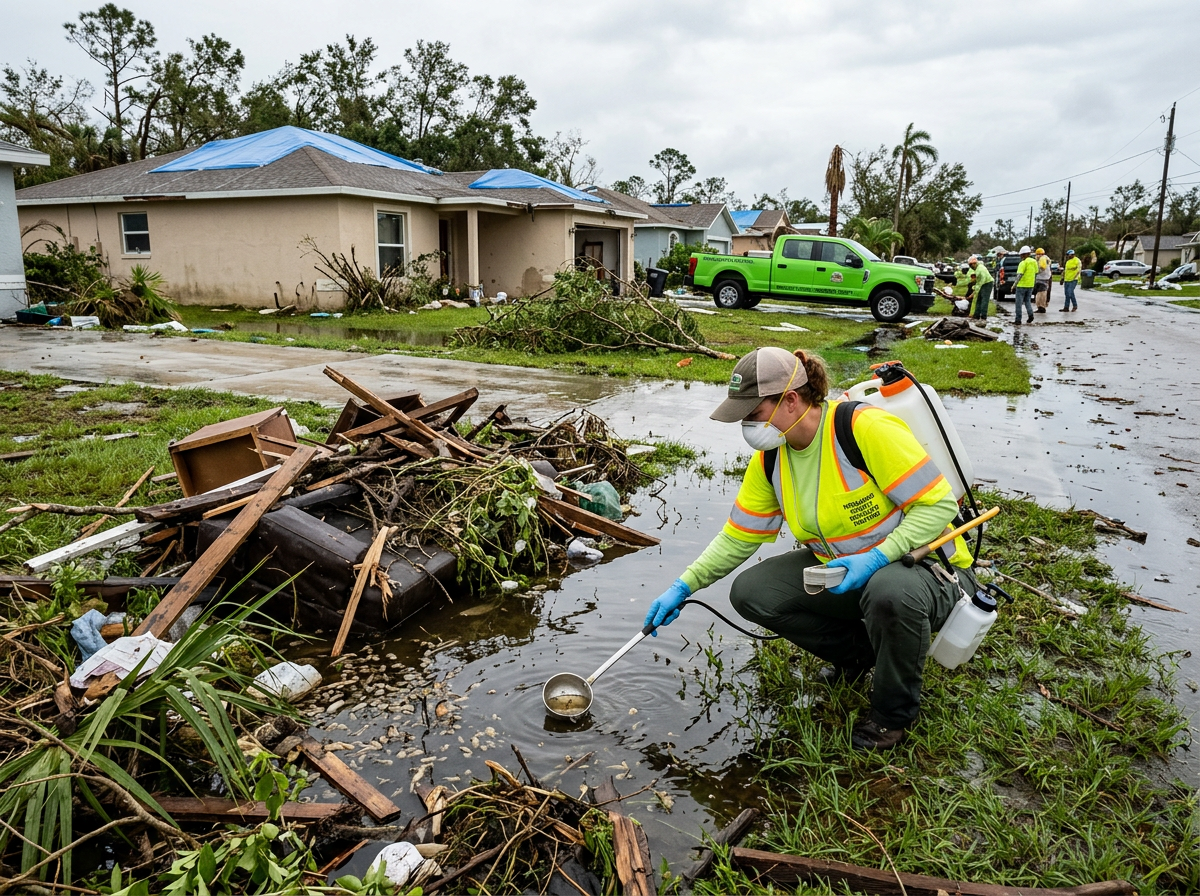
Hurricane recovery in Hernando County raises mosquito numbers for several weeks because floodwaters and storm debris create fresh breeding sites that produce adults in 7-10 days from egg to flight.
Standing Water Created by Storm Debris
Hurricanes drop heavy rain and scatter materials across yards in Hernando County that hold water long after skies clear. Tarps over damaged roofs, overturned boats, and clogged gutters collect inches of water that container species use immediately. A single bottle-cap volume of water is enough for eggs to develop. Afternoon storms common in Florida reset these sites daily, shortening the time between hatches. Property owners who clear debris within the first week reduce the number of new adults that emerge before the next rain cycle.
Salt-Marsh and Container Species Flight Ranges
Salt-marsh mosquitoes can travel 20 miles or more inland on storm winds and reach inland neighborhoods in Hernando County that normally see only local container breeders. Container species stay within a few hundred yards of their hatching site, so they concentrate around homes with scattered plant saucers, bromeliads, and boat covers. The two groups overlap after hurricanes, extending the period when biting pressure stays high. Barrier treatments applied to shaded vegetation interrupt resting adults of both types without needing to treat every water pocket.
No-See-Ums Passing Through Standard Screens
No-see-ums often increase after flooding because they breed in the same wet debris that produces mosquitoes. Their small size lets them pass through standard window screening, so residents notice bites indoors even when doors stay closed. Mesh rated 20 by 20 or finer blocks most adults. Homeowners who add door sweeps and repair torn screens cut indoor entry while waiting for outdoor populations to drop. Professional no-see-um control focuses on shaded perimeter vegetation where these midges rest between blood meals.
Timing of Post-Storm Breeding Cycles
Eggs laid in moist debris can remain dormant until water covers them, then reach adulthood in 7-10 days under summer temperatures. In Hernando County this means a second wave of adults often appears two weeks after the initial cleanup rush. Treatment intervals of two to three weeks align with this cycle when barrier sprays target resting sites. Standing-water reduction performed early removes the source before the first hatch completes, lowering the total number of adults that require later control.
Connecting Recovery Actions to Long-Term Control
Residents who combine debris removal with targeted yard work see faster drops in biting activity. Standing water and breeding site reduction addresses the root cause created by hurricane damage. Spotting mosquito breeding sites after summer storms offers a checklist that applies directly to post-hurricane conditions in Hernando County. When numbers remain elevated, no-see-um and biting midge control extends protection to indoor spaces. What affects mosquito treatment costs in Hernando County explains how storm-related site visits differ from routine service calls.