
2026-09-15 ·
Checking Bird Feeders and Fountains for Hidden Breeding
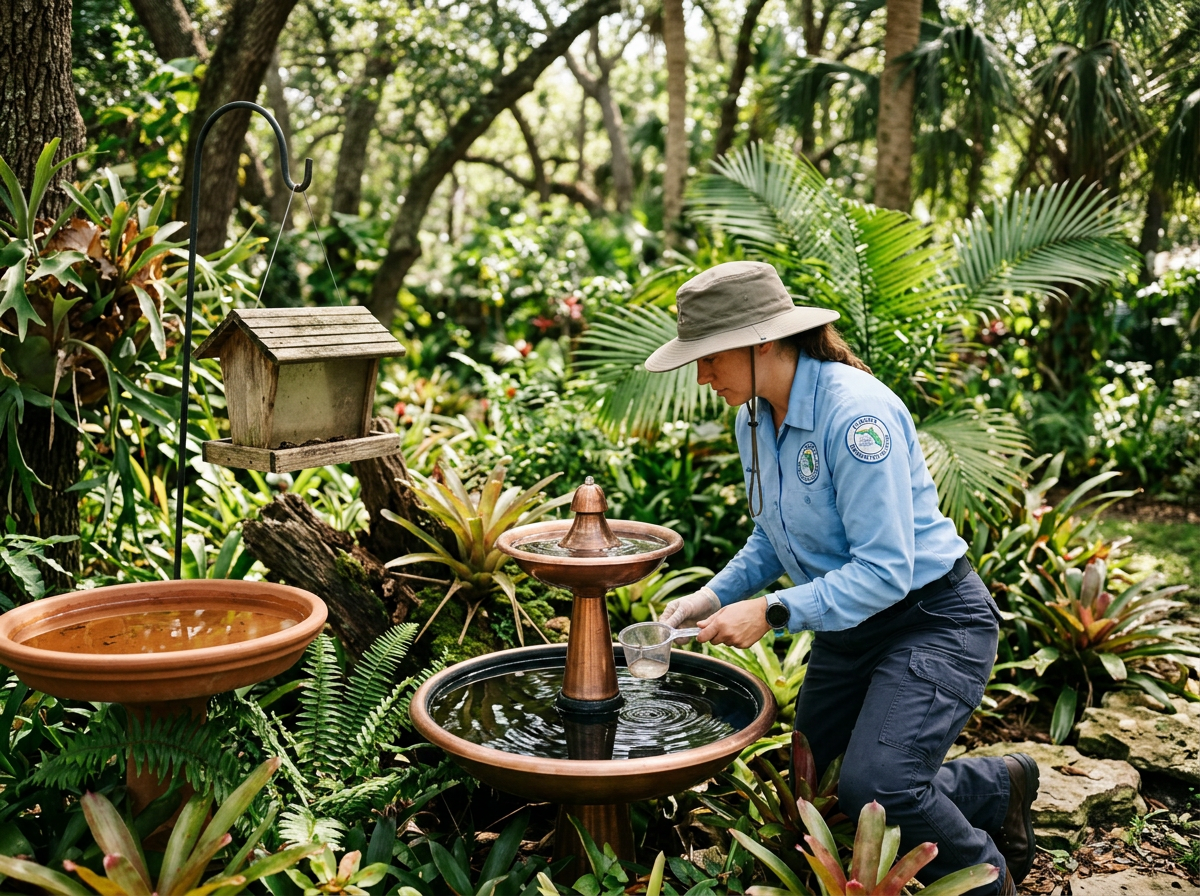
Bird feeders and fountains need inspection every 3-4 days because Florida mosquitoes complete egg-to-adult cycles in 7-10 days with no winter die-off. Even 1 inch of standing water in a saucer or basin supports container-breeding species that stay close to homes.
Why These Features Become Breeding Sites
Bird baths and fountain basins collect rainwater plus overflow from refills, creating stagnant pockets that afternoon storms reset daily. Seed trays under feeders trap moisture in the 1/4-inch range, while decorative fountains often have low-flow areas where water sits undisturbed. Container species lay eggs on these surfaces rather than open ponds, allowing quick development before the next rain cycle. Salt-marsh mosquitoes may travel several miles inland but rarely use these small sites, keeping the focus on local container reduction.
Daily and Weekly Inspection Steps
Start at the feeder base and lift any seed-catching tray to dump collected water. Check fountain pump housings and leaf screens for hidden pools that refill after each storm. Empty and scrub basins with a stiff brush to remove eggs attached to surfaces, then refill only what will be used that day. For hanging feeders, tilt the unit slightly during cleaning so water exits through drainage holes instead of pooling again. These steps fit into a 10-minute routine performed three times per week during peak summer months.
How Little Water Supports Larvae
Mosquito eggs hatch in water as shallow as 1/4 inch, a depth common in plant saucers beneath feeders or fountain overflow channels. Larvae can complete development before the next dry spell because Florida storms often leave residual moisture in shaded spots. Removing that thin layer prevents the cycle without needing chemical treatment in the feature itself. Homeowners in Brooksville notice fewer adults near patios once these micro-sites are addressed consistently.
Connection to Broader Yard Practices
Combining feeder and fountain checks with standing water reduction addresses the full range of container habitats around the property. Shaded vegetation near these features also serves as resting areas, which aligns with barrier treatments applied every 2-4 weeks. Readers in nearby areas can compare patterns in the Weeki Wachee article for additional context on local timing.
When to Add Screening or Covers
Fine mesh of 20x20 or smaller blocks no-see-ums that pass through standard window screens and can enter fountain pump covers. Weighted covers on bird baths during multi-day rain forecasts keep new water from accumulating. These physical barriers complement manual emptying without replacing the need to inspect weekly. After hurricane recovery periods, extra debris in fountains increases the value of these covers as noted in the Hernando County recovery post.
Maintaining Results Year-Round
Florida's consistent warmth means breeding continues through winter months whenever temperatures allow standing water. Schedule checks on the same days as other outdoor tasks so the habit sticks. Track which features refill fastest after storms to prioritize those during busy periods. Consistent attention to these small sites reduces the overall number of adults that later seek shaded resting spots across the yard.